October is Facial Pain Awareness Month, and for many people living with trigeminal neuralgia (TN), it brings something rare: being seen. But awareness only matters if it leads to care. If you have been typing “trigeminal neuralgia treatment near me” into a search bar at 2 a.m., this guide explains who treats TN, what effective treatment looks like, and how to find a qualified facial pain doctor in your area.
What Is the Best Way to Find Trigeminal Neuralgia Treatment Near Me?
The best way to find trigeminal neuralgia treatment near you is to start with a neurologist experienced in facial pain, confirm the diagnosis, and then look for a center that offers both medication management and surgical options. Experience matters more than distance. A specialist two hours away who treats TN every week will often serve you better than a general clinic down the street.
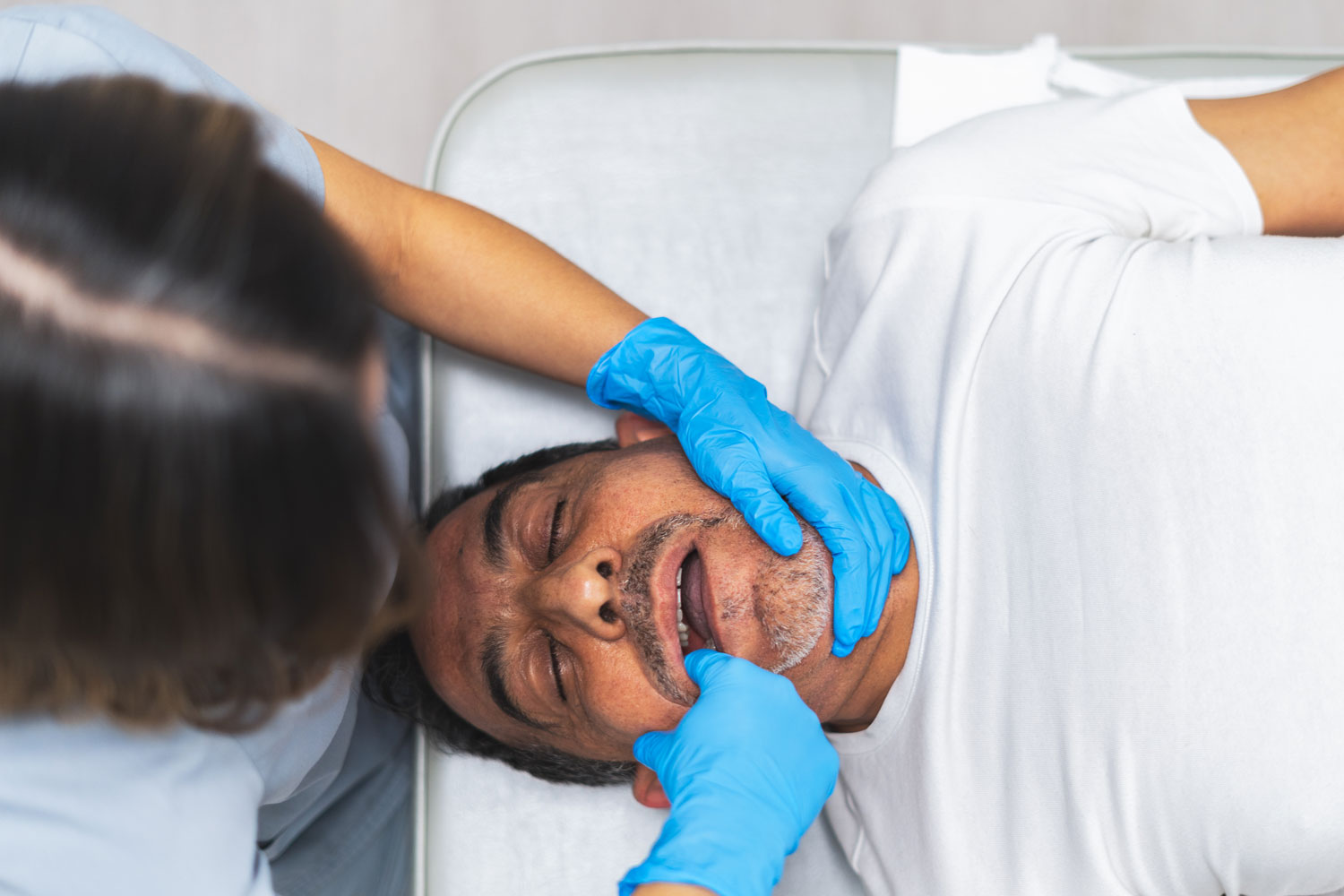
TN causes sudden, electric shock-like pain along the trigeminal nerve, usually on one side of the face. Because it can feel like a toothache, a sinus problem, or a migraine, many people see several providers before getting the right answer. Learn more on our Trigeminal Neuralgia page.
Which Facial Pain Doctor Near Me Should I See?
No single specialty owns facial pain. The right facial pain doctor near you depends on where you are in your journey:
- Neurologist: usually the first stop for diagnosis, MRI review, and medication.
- Neurosurgeon: evaluates surgical options when medication stops working, or side effects become hard to tolerate.
- Orofacial pain specialist: a dentist with advanced training who helps rule out dental and jaw causes.
- Pain management physician: may offer nerve blocks and help coordinate long-term care.
You can begin your search with the FPA Find a Doctor resource, which lists neurologists, neurosurgeons, and orofacial pain specialists by state.

What Should a Facial Pain Clinic Near Me Offer?
A strong facial pain clinic near you should offer a full range of treatments, not just one tool. Ask whether they provide:
- Medication management: anticonvulsants such as carbamazepine and oxcarbazepine are typically first-line treatments for classical TN, with alternatives if these are not tolerated.
- Microvascular decompression (MVD): a surgery that moves a blood vessel away from the trigeminal nerve.
- Stereotactic radiosurgery: such as Gamma Knife, a non-invasive option that targets the nerve with focused radiation.
- Percutaneous rhizotomy: needle-based procedures including glycerol injection, balloon compression, and radiofrequency lesioning.
- Neuromodulation: emerging approaches for pain that does not respond to standard care.
To hear directly from experts, watch the FPA webinar Developments in the Management and Treatment of Trigeminal Neuralgia.
Do I Need an MS Facial Pain Specialist Near Me?
If you have multiple sclerosis and new facial pain, it is worth seeking an MS facial pain specialist near you. MS can damage the protective coating along trigeminal nerve pathways, causing pain that looks like TN but can behave differently. People with MS-related TN are often younger at onset, may have pain on both sides of the face, and may respond differently to surgery than people with classical TN.
Look for a neurologist experienced in both MS and facial pain, ideally one who works closely with a neurosurgeon. Read more about multiple sclerosis and facial pain.
Is It Trigeminal Neuralgia or Migraine?
This is one of the most common questions in our community. Both conditions involve the trigeminal nerve system, and both can cause intense head and facial pain, yet they are diagnosed and treated very differently.
That is why the FPA partnered with the Alliance for Headache Disorders Advocacy (AHDA) this October to host a lunch-and-learn webinar on the similarities and differences between migraine and TN, held October 19 at noon ET. If you missed it, browse the FPA webinar library for past sessions, and read our guide on trigeminal neuralgia vs. migraine.
What Should I Ask Before Booking Facial Pain Treatment Near Me?
Before booking facial pain treatment near you, ask:
- How many trigeminal neuralgia patients do you see each year?
- Do you offer both medical and surgical treatments, or will I be referred elsewhere?
- Will my MRI be reviewed with the trigeminal nerve in mind?
- How do you decide when medication is no longer enough?
- What are the risks, recovery time, and expected durability of relief for each procedure you recommend?
A good specialist will welcome these questions. If a provider rushes you toward an irreversible procedure without confirming the diagnosis, get a second opinion.
How Facial Pain Awareness Month Helps Patients Find Care
Awareness is not just ribbons and hashtags. Trigeminal Neuralgia Awareness Day on October 7 and the wider Facial Pain Awareness Month help more people recognize their symptoms and reach the right specialist sooner.

This year, the FPA’s Light It Up Teal campaign, powered by dedicated volunteers, is lighting more than 80 buildings, bridges, and monuments in teal, the official color of facial pain awareness. You can still take part before the month ends by sharing your experience with #FaceTodayTogether and #MyTNStory. Find more ways to join on our Face Today Together page.
Finding care does not have to happen alone. FPA support groups and 1:1 peer support connect you with people who have already searched for answers and found them.
Frequently Asked Questions
Who is the best doctor for trigeminal neuralgia?
A neurologist with facial pain experience is usually the best first doctor for TN. If medication fails, a neurosurgeon who regularly performs TN procedures is the next step.
Can a dentist treat trigeminal neuralgia?
A general dentist cannot treat TN, but an orofacial pain specialist can help rule out dental causes and refer you to a neurologist. Avoid repeated dental procedures if your teeth are healthy.
Is trigeminal neuralgia curable?
There is no guaranteed cure, but many people achieve long periods of relief through medication, MVD, or other procedures. Results depend on the type of TN and its cause.
Is MS-related trigeminal neuralgia treated differently?
Often, yes. MS-related TN may respond differently to medication and surgery, so care should be coordinated between an MS neurologist and a facial pain team.
When is Trigeminal Neuralgia Awareness Day?
Trigeminal Neuralgia Awareness Day is October 7, during Facial Pain Awareness Month. Teal is the official color of facial pain awareness.
Take the Next Step Toward Relief
You do not have to keep searching on your own. Download the free FPA Patient Guide, connect with our community, and visit the Facial Pain Association for trusted education and support all year, not just in October.